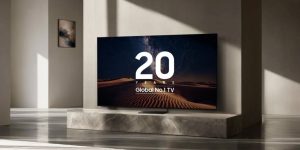

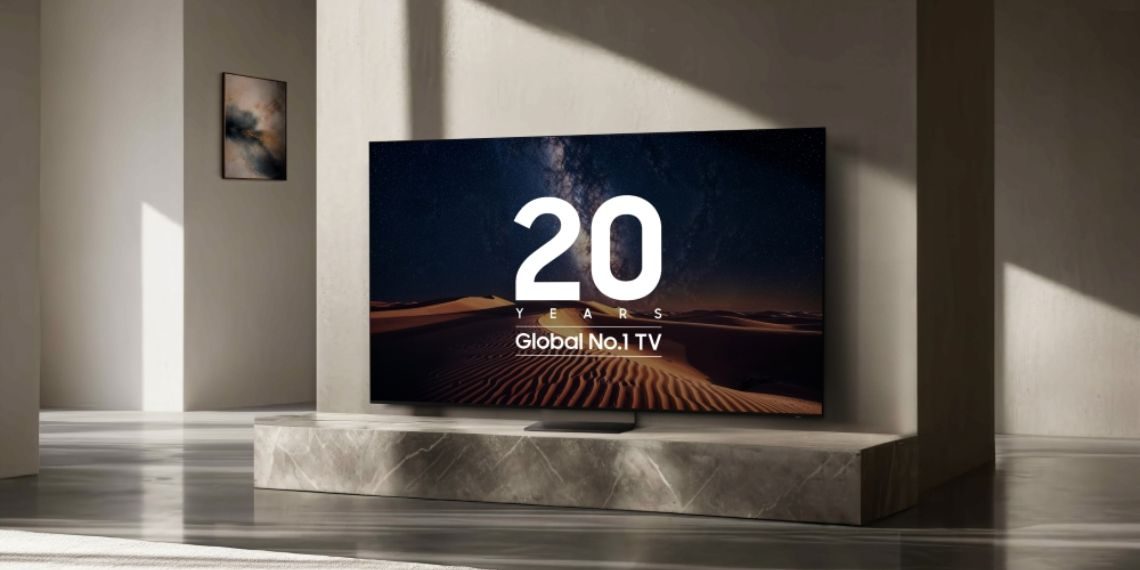
Global technology giant Samsung Electronics has once again secured its position as the world’s No. 1 television brand, marking an impressive 20 consecutive years of leadership in the global TV market. According to market research firm Omdia, Samsung achieved a 29.1% global TV market share in 2025, continuing a streak that began in 2006.
This long-standing leadership highlights Samsung’s consistent focus on display innovation, premium television technology, and evolving consumer experiences. Over the past two decades, the company has played a key role in shaping modern television design, introducing breakthrough technologies such as QLED, Micro LED, and advanced AI-powered viewing features.
Strong Performance in the Global TV Market
Samsung’s 29.1% share of the global television market in 2025 reflects its dominance across several major segments, including:
Premium televisions
Ultra-large screen TVs
Next-generation display technologies
The company has steadily strengthened its position by combining cutting-edge display technology with design innovation and smart connectivity, helping it maintain a leading presence in both developed and emerging markets.
This success also reflects strong consumer trust in Samsung’s televisions, which are widely recognized for high picture quality, durable hardware, and advanced smart features.
Dominance in the Premium Television Segment
Samsung has also continued to dominate the premium TV segment, where competition is particularly intense.
According to data from Omdia:
Samsung holds 54.3% market share in TVs priced above $2,500
The company also commands 52.2% share in televisions priced above $1,500 globally
This strong performance has been driven by the popularity of Samsung’s premium product lineup, including:
Samsung Neo QLED TVs
Samsung OLED TVs
Samsung Lifestyle TVs such as The Frame TV and The Serif TV
These models combine advanced display technology with design-focused aesthetics, appealing to consumers who want both performance and style in their home entertainment systems.
A Journey That Began with the Bordeaux TV
Samsung first achieved the global No. 1 television position in 2006 with the launch of the Samsung Bordeaux TV. This model stood out for its elegant design and became one of the company’s most iconic televisions.
The success of the Bordeaux TV marked the beginning of Samsung’s two-decade dominance in the TV market and established the brand as a major innovator in display technology.
Key Milestones in Samsung’s TV Innovation
Over the years, Samsung has introduced numerous innovations that have shaped the evolution of modern televisions.
2009 – Expansion of LED TVs
Samsung accelerated the adoption of LED-backlit televisions, making displays thinner, more energy efficient, and capable of delivering improved brightness and contrast.
2011 – Introduction of Smart TVs
The company launched its first generation of smart televisions, allowing users to access internet services, streaming platforms, and apps directly from their TVs.
2015 – Launch of The Serif
Samsung introduced the Samsung The Serif, a design-oriented television created to blend seamlessly into home interiors as a piece of furniture.
2017 – Launch of The Frame
The Samsung The Frame television transformed the concept of TV design by displaying digital artwork when not in use, effectively doubling as a decorative element.
2017 – Introduction of QLED Technology
Samsung unveiled Samsung QLED TV technology, which uses quantum dot materials to improve color accuracy, brightness, and longevity compared to conventional LED displays.
2018 – Introduction of 8K TVs
Samsung launched 8K televisions, featuring over 33 million pixels, delivering four times the resolution of standard 4K displays.
2020 – Micro LED Technology
The company introduced Samsung MicroLED TV, an advanced display technology designed to deliver exceptional brightness, contrast, and color performance, particularly on large screens.
Continuous Innovation in TV Technology
Samsung continues to invest heavily in the development of next-generation television technologies.
Recent advancements include:
Expansion of Micro RGB display models
Improvements to OLED and Neo QLED televisions
Wider adoption of Mini LED backlighting technology
Development of AI-powered picture and sound processing
These AI-powered systems use dedicated processors to automatically adjust:
Picture quality
Brightness and contrast
Sound output
Viewing preferences based on user behavior
This approach helps deliver a more personalized and immersive viewing experience for consumers.
Leadership Perspective
Commenting on the achievement, SW Yong, President and Head of the Visual Display Business at Samsung Electronics, emphasized the importance of consumer trust and continuous innovation.
According to Yong, when customers purchase a television, they are investing in a device expected to last for many years. Samsung’s two decades of market leadership reflects consumer confidence built through engineering expertise, design innovation, and advanced display technologies.
Conclusion
Maintaining the No. 1 position in the global TV market for 20 consecutive years is a remarkable milestone for Samsung. With a 29.1% global market share in 2025, the company continues to lead the industry through technological innovation, premium product offerings, and a strong focus on user experience.
As Samsung continues to develop new display technologies such as Micro LED, AI-enhanced viewing systems, and advanced Mini LED televisions, the company appears well positioned to maintain its leadership in the rapidly evolving home entertainment market for years to come
Follow Before You Take on:
Latest Technology News | Updates | Latest Electric Vehicle News | Updates | Electronics News | Mobile News | Updates | Software Updates
📌 Facebook | 🐦 Twitter | 📢 WhatsApp Channel | 📸 Instagram | 📩 Telegram | 💬 Threads | 💼 LinkedIn | 🎥 YouTube
🔔 Stay informed, Stay Connected!