
Qualcomm Technologies recently hosted its flagship event, “Snapdragon for India: XR Day,” in New Delhi to emphasize the company’s strategic commitment to spatial computing and artificial intelligence (AI) in the Indian market. The event spotlighted cutting-edge XR (Extended Reality) innovations powered by Snapdragon platforms and underlined Qualcomm’s vision of building a robust XR ecosystem with local partners.
Qualcomm’s Global XR Leadership
During the event, Alex Katouzian, Group General Manager for Mobile, Compute & XR at Qualcomm, revealed that more than 100 AR, VR, and MR devices globally are powered by Snapdragon XR platforms. In a key demonstration, he showcased a Small Language Model (SLM) running directly on a pair of Snapdragon-powered AI glasses. This local processing capability, as opposed to cloud dependency, is a significant leap forward in enabling real-time and personalized user experiences.
AI Meets XR: A Future-Ready Combination
Katouzian emphasized that artificial intelligence is playing an increasingly critical role in XR environments. With the ability to process audio and visual input locally, AI enhances XR interactions by making them more intuitive and responsive. “This is the next generation of computing,” he said, describing the fusion of AI and XR as both immersive and seamlessly integrated into daily routines.
Lenskart Collaboration for Smart Glasses
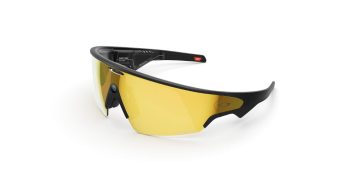
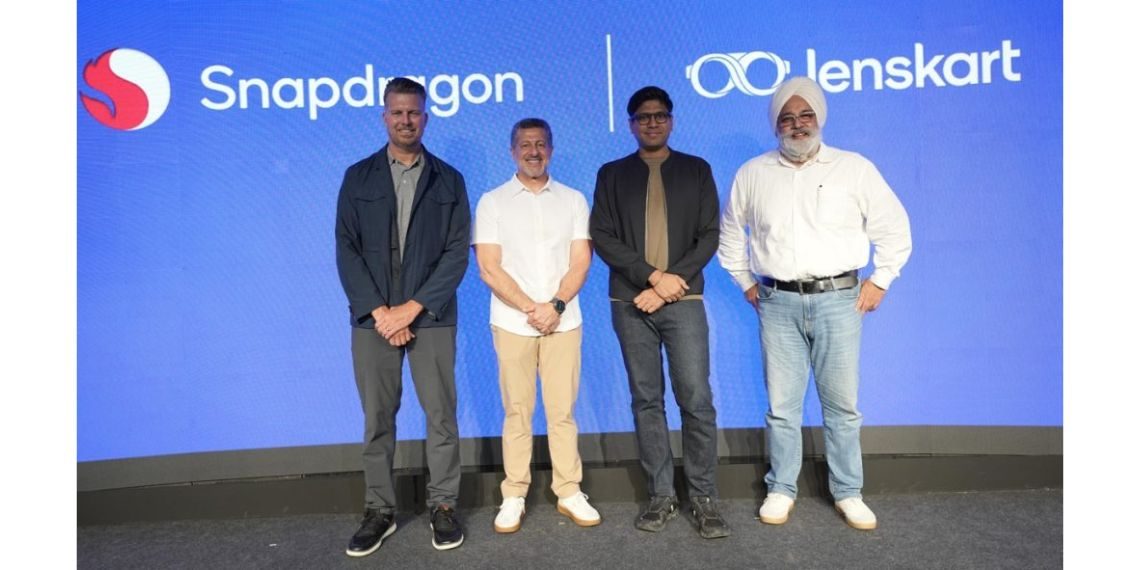
A major highlight of XR Day was Qualcomm’s announcement of a strategic collaboration with leading Indian eyewear brand Lenskart. Through this partnership, upcoming Lenskart smart glasses will be powered by Snapdragon chipsets, bringing AI-enabled, lightweight wearable tech to Indian consumers. This move underscores Qualcomm’s commitment to localizing its XR ambitions and creating devices tailored for the Indian market.
India’s Role in Spatial Computing Savi Soin, Sr. Vice President and President of Qualcomm India, stressed India’s central role in advancing immersive technologies. He noted, “India is leading a transformative shift in how reality is experienced.” He added that Snapdragon-powered smart glasses will play a pivotal role in daily tasks and digital inclusion. Qualcomm’s technology aims to be lightweight yet powerful, making spatial computing more accessible and impactful in areas like education, fieldwork, and remote communication.
Use Cases and Societal Impact
Throughout XR Day, Qualcomm demonstrated various use cases for spatial computing—including education in rural regions, digital training for frontline workers, immersive fitness experiences, and new dimensions of content creation. These examples illustrated how XR can drive digital inclusion and economic empowerment, in line with the Indian government’s Viksit Bharat initiative.
Conclusion
Qualcomm’s XR Day in India marks a significant step in positioning the country at the heart of the global immersive technology movement. With AI-driven smart glasses, local partnerships like Lenskart, and a strong push for real-world applications, Qualcomm is paving the way for a spatially enriched digital future. The integration of Snapdragon platforms into everyday devices reflects a long-term vision where XR becomes a mainstream part of the Indian consumer tech landscape.
Follow Before You Take on:
Latest Technology News | Updates | Latest Electric Vehicle News | Updates | Electronics News | Mobile News | Updates | Software Updates
📌 Facebook | 🐦 Twitter | 📢 WhatsApp Channel | 📸 Instagram | 📩 Telegram | 💬 Threads | 💼 LinkedIn | 🎥 YouTube
🔔 Stay informed, Stay Connected!