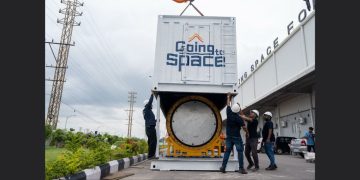

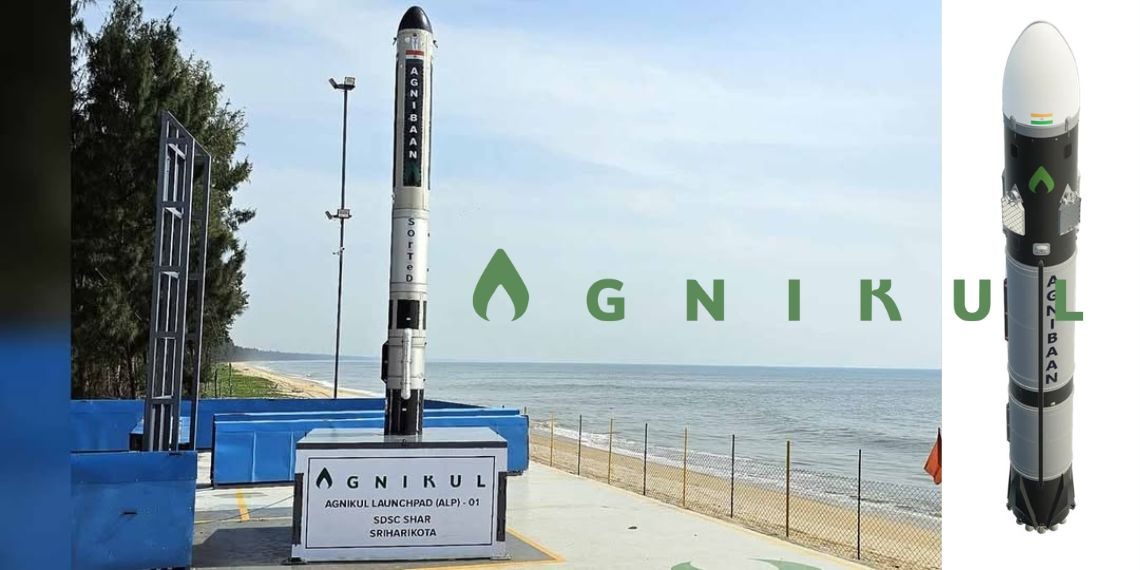
India’s spacetech ecosystem continues to gain global attention, and Agnikul Cosmos has once again positioned itself as a frontrunner. The Chennai-based startup — known for developing the world’s first single-piece 3D-printed rocket engine — has secured ₹150 crore ($17 million) in a fresh funding round, propelling its valuation to $500 million. The latest investment marks a major milestone as the company accelerates its mission to build next-generation launch technologies and strengthen India’s growing private space sector.
Funding Round and Key Investors
Agnikul’s new funding round drew participation from leading institutional investors and prominent family offices, including:
This diverse investor interest underscores the increasing confidence in India’s indigenous spacetech capabilities and Agnikul’s unique technological edge.
Expansion of 3D-Printed Rocket Manufacturing
A significant portion of the newly raised capital will be deployed toward expanding Agnikul’s manufacturing capabilities. The company plans to scale its production units for:
Aerospace components
3D-printed rocket parts
Advanced propulsion systems
This expansion aims to push the boundaries of additive manufacturing in the global space industry, strengthening Agnikul’s position as a pioneer in 3D-printed launch vehicle technology.
Development of the Integrated Space Campus
Agnikul is also moving forward with its ambitious 350-acre integrated space campus, allocated by the Tamil Nadu Government. This facility will house:
Complete rocket manufacturing lines
Testing infrastructure for launch vehicle systems
End-to-end development units
Mission-readiness and integration facilities
The campus will be strategically located near India’s upcoming launchpad, enabling rapid deployment and reducing logistic complexity for frequent launch operations.
Advancing Reusable Launch Architectures
Agnikul is rapidly innovating in the domain of reusable launch systems, an area that is reshaping the economics of space missions globally. Building on its newly granted patent that extends the operational life of upper-stage engines, the company aims to:
Strengthen reusable launch vehicle technology
Reduce overall launch costs
Enable rapid turnaround operations
Move closer to becoming the world’s first recoverable small-satellite launch provider
These advancements could significantly enhance India’s competitiveness in the international launch market.
ISRO Collaboration and Technological Progress
Following its successful controlled ascent mission — powered by Agnikul’s patented technologies and supported by ISRO and IN-SPACe — the startup is now scaling its strategy to include:
Lower-stage recovery systems
Upper-stage extension technologies
Improved unit economics for launch services
According to Srinath Ravichandran, CEO & Co-founder, this funding strengthens the company’s path toward more frequent launches and globally competitive solutions “built from India, for the world.”
Growing Customer Base and Global Launch Demand
Agnikul has already built a strong pipeline of customers across:
India
The Middle East
Australia
With over a dozen missions lined up, the company is scaling its operational depth to meet global demand for low-Earth-orbit (LEO) satellite deployment — a market growing rapidly due to rising satellite constellations and broadband networks.
Investor Confidence and Industry Impact
Early investors continue to express strong confidence in Agnikul’s long-term vision.
Arun Kumar, Managing Partner at Celesta Capital, emphasized Agnikul’s role in meeting the massive global demand for LEO satellites, calling the startup “a standout example of India’s deep-tech innovation.”
Similarly, Anirudh A Damani of Artha Select Fund highlighted the company’s global potential and innovative approach, revealing that this round includes their largest investment yet in Agnikul.
New Large Format Metal 3D Printing Facility
Agnikul recently announced the establishment of a Large Format Metal Additive Manufacturing Unit, enabling 3D printing of multiple subsystems beyond just engines. This advancement aims to:
Increase cost efficiency
Reduce manufacturing cycles
Enhance design flexibility
Extend the use of additive manufacturing in complex launch vehicle structures
This new capability marks another major leap in India’s indigenous space manufacturing ecosystem.
Conclusion
Agnikul’s ₹150 crore funding round represents more than just capital infusion — it highlights India’s rising prominence in global spacetech innovation. With cutting-edge 3D-printed rocket technologies, reusable launch systems, and an ambitious integrated space campus, the company is set to redefine cost-efficient orbital access.
As the demand for small satellite launches continues to surge worldwide, Agnikul is well-positioned to become a key global player, carrying India’s private space industry forward into an era of advanced, sustainable, and scalable space transportation.
Follow Before You Take on:
Latest Technology News | Updates | Latest Electric Vehicle News | Updates | Electronics News | Mobile News | Updates | Software Updates
📌 Facebook | 🐦 Twitter | 📢 WhatsApp Channel | 📸 Instagram | 📩 Telegram | 💬 Threads | 💼 LinkedIn | 🎥 YouTube
🔔 Stay informed, Stay Connected!