
India’s smartphone market witnessed a slowdown in the first quarter of 2026, according to the latest report from the International Data Corporation (IDC). Smartphone shipments in the country declined by 4.1 percent year-over-year, reaching 31 million units during Q1 2026. While overall shipment volumes dropped, the market continued to grow in value terms, highlighting a major shift in consumer buying behavior and industry strategy.
The latest findings indicate that India’s smartphone ecosystem is gradually moving away from a volume-driven market toward a more value-oriented structure, where consumers are increasingly purchasing higher-priced devices and brands are focusing on profitability instead of aggressive discounting.
India Smartphone Market Faces Shipment Decline in Q1 2026
IDC’s Worldwide Quarterly Mobile Phone Tracker revealed that India’s smartphone shipments fell to 31 million units during the January–March 2026 quarter. The decline was mainly attributed to rising component prices, especially memory costs, along with subdued consumer demand after the festive sales season.
@IDC
Although shipment volumes weakened, the overall market value grew by 5.8 percent year-over-year. This growth was largely driven by rising smartphone prices across segments.
The average selling price (ASP) of smartphones in India reached a record high of $302, reflecting a 10.4 percent annual increase. This demonstrates that consumers are either upgrading to better devices or being pushed into higher price categories due to the shrinking availability of affordable smartphones.
Rising Memory Prices Impact Smartphone Affordability
One of the biggest reasons behind the slowdown was the continued increase in memory prices globally. Rising component costs forced smartphone brands to revise pricing structures and reduce their focus on low-margin devices.
Manufacturers also reduced aggressive discount campaigns, which traditionally play a crucial role in boosting smartphone sales in India. With limited pricing flexibility, brands shifted toward protecting margins rather than chasing shipment volumes.
IDC noted that many companies front-loaded inventory ahead of expected cost increases, but actual consumer purchases remained slower than the supply entering retail channels.
Entry-Level Smartphone Segment Sees Massive Decline
The most heavily affected category during Q1 2026 was the sub-$100 smartphone segment. Affordable smartphones became increasingly difficult for brands to sustain due to higher production costs and thinner profit margins.
Key Changes in the Entry-Level Segment
Sub-$100 smartphone segment declined by 59 percent YoY
Market share dropped from 18 percent to 8 percent
Several brands reduced their presence in the ultra-budget category
This sharp decline significantly changed the structure of India’s smartphone market. Many consumers who previously purchased entry-level devices were pushed into higher price segments due to limited affordable options in the market.
Mid-Range Smartphones Become the Market’s Growth Engine
As budget smartphone availability weakened, the mid-range segment emerged as the primary driver of smartphone sales in India.
The $100–200 category grew by 10 percent year-over-year and captured 45 percent of the total market share, becoming the largest smartphone segment in the country.
Higher premium categories also showed strong growth:
$400–600 segment grew 29 percent YoY
$600–800 segment expanded 32 percent YoY
$800+ flagship segment maintained a stable 7 percent share
Industry analysts believe that easier financing options, EMI availability, cashback schemes, and premium-focused marketing campaigns helped sustain demand in higher price categories.
Offline Smartphone Sales Gain Momentum
Another major trend highlighted in the IDC report was the increasing importance of offline retail channels.
Smartphone brands relied more heavily on physical retail stores to manage inventory movement and maintain pricing control. As a result:
Offline retail share increased to 62 percent
Online market share dropped to 38 percent
Online smartphone shipments declined by 14 percent YoY
This shift indicates that consumers are increasingly preferring assisted purchases, financing support, and in-store product experiences, especially for mid-range and premium smartphones.
vivo Retains Leadership While Apple Strengthens Premium Position
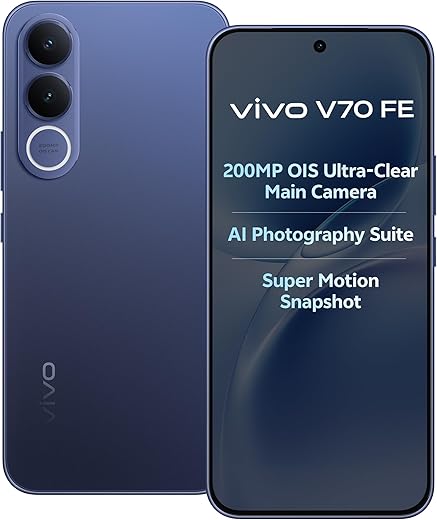
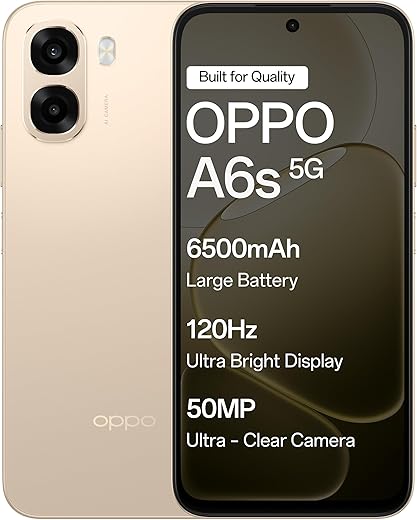
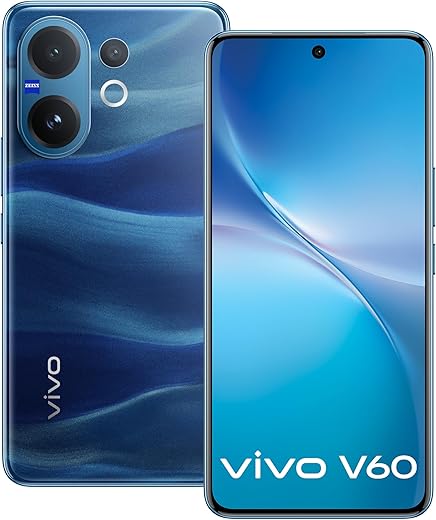
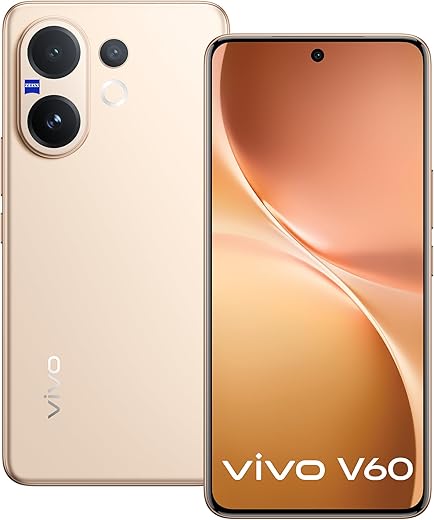
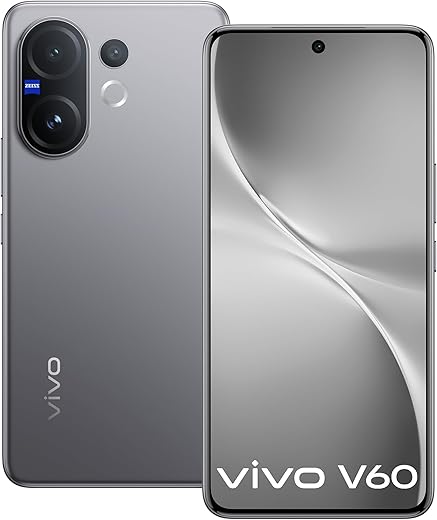
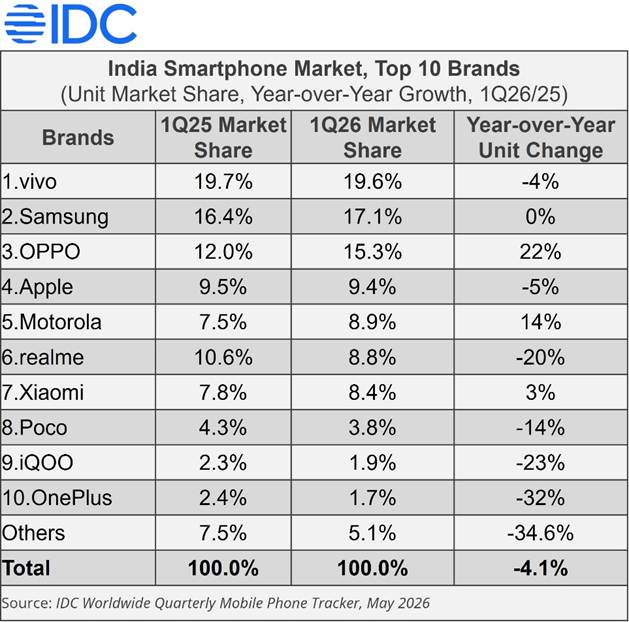
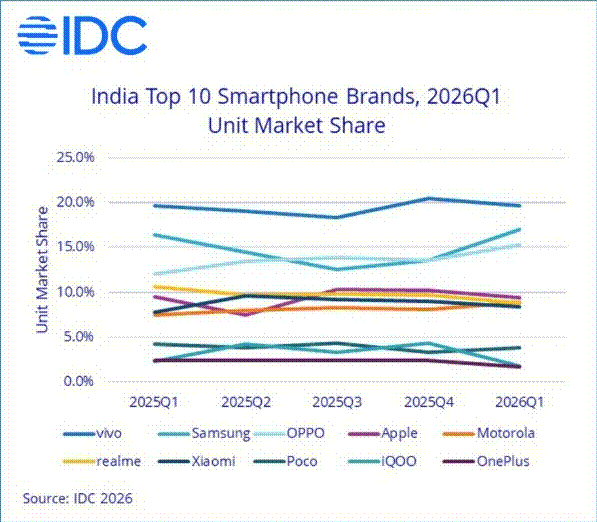
Among smartphone brands, vivo maintained its leadership position in India during Q1 2026, followed by Samsung and OPPO.
Meanwhile, Apple continued to dominate the premium smartphone segment in terms of market value contribution.
Key Brand Highlights
Apple captured a 28 percent value share in the market
The iPhone 17 alone contributed nearly 4 percent of total smartphone shipments
Motorola entered the top five smartphone brands in India for the first time
Motorola’s rise reflects growing demand in the mid-range smartphone category, where the company has been aggressively expanding its portfolio.
Analysts Highlight Structural Changes in Consumer Buying Patterns
IDC analysts emphasized that India’s smartphone market is now experiencing long-term structural changes rather than temporary fluctuations.
@IDC
According to Aditya Rampal, Senior Research Analyst at IDC Asia Pacific, smartphone brands are moving away from heavy promotional discounts because rising component costs have reduced pricing flexibility.
Instead, companies are increasingly focusing on:
Product differentiation
Premium positioning
EMI-based affordability
Financing-led purchase strategies
This transition is reshaping how smartphone demand is generated across India.
Indian Consumers Are Changing Their Purchase Habits
IDC also pointed out that Indian consumers are gradually changing their purchasing behavior.
Traditionally, many buyers delayed smartphone purchases until festive sales periods in expectation of large discounts. However, with prices expected to remain elevated due to ongoing memory shortages, this pattern may weaken over time.
Upasana Joshi, Senior Research Manager at IDC Asia/Pacific, explained that consumers may increasingly prefer earlier purchases instead of waiting for major sale events, especially if pricing continues to rise through 2027.
Premium Smartphones Continue to Show Stability
Despite overall shipment weakness, premium smartphone demand in India remains stable. Consumers are increasingly prioritizing better performance, camera quality, AI capabilities, premium design, and long-term software support.
The continued success of flagship and upper mid-range smartphones indicates that the Indian market is gradually maturing, particularly in urban and aspirational regions.
However, analysts caution that premium growth alone may not fully compensate for ongoing weakness in the mass-market category.
Outlook for India’s Smartphone Market in 2026
IDC expects the first half of 2026 to remain relatively stable due to inventory buffers and partial cost absorption by smartphone brands. However, annual shipment forecasts are likely to be revised downward if memory inflation persists.
The second half of the year will largely depend on:
Festive season demand
Component price stability
Financing availability
Brand pricing strategies
Recovery in entry-level affordability
The industry is increasingly moving toward a balanced ecosystem where profitability, financing models, and premiumization matter more than sheer shipment volumes.
Conclusion
India’s smartphone market is undergoing a major transformation in 2026. While shipment volumes declined during Q1, the rise in average selling prices and premium smartphone demand highlights a shift toward value-driven growth.
Rising memory prices, weaker entry-level affordability, and changing consumer preferences are reshaping the competitive landscape. Brands are now focusing more on premium experiences, financing options, and offline retail expansion rather than aggressive discount-led sales strategies.
As component pricing pressures continue and consumer expectations evolve, the Indian smartphone industry is entering a new phase where sustainable growth may depend more on innovation, affordability strategies, and ecosystem integration than on pure shipment numbers alone.
Follow Before You Take on:
Latest Technology News | Updates | Latest Electric Vehicle News | Updates | Electronics News | Mobile News | Updates | Software Updates
📌 Facebook | 🐦 Twitter | 📢 WhatsApp Channel | 📸 Instagram | 📩 Telegram | 💬 Threads | 💼 LinkedIn | 🎥 YouTube
🔔 Stay informed, Stay Connected!